
Cullman County Criminal Court Records
A criminal court record is the case-level file kept by the court after charges are filed or a warrant case reaches court. In Cullman County, the Circuit Clerk's Office is the records hub for Circuit and District criminal divisions. The Circuit Clerk profile states that court records are electronically imaged and divided into multiple divisions, including Criminal, Traffic, Juvenile, Warrants, Civil, Domestic, and Child Support.
Felony criminal matters are handled in Circuit Court. The local Circuit Criminal page covers felony arrests, preliminary hearings, bond-over to grand jury, dismissal, conviction, sentence, and appeal activity. District Court handles misdemeanors, preliminary felony hearings, and some felony guilty pleas not punishable by death. City of Cullman Municipal Court keeps city-only municipal misdemeanor, ordinance, and city traffic records. The full case outcome belongs in the court record, while the narrower path from arrest to filed charges is covered by the Cullman County arrest records and court charges page.
Search Cullman County Criminal Court Records
The main online source for Cullman County criminal court records is Alacourt ACCESS / Just One Look. Alacourt lists criminal records among the record types available through its paid public trial court access. The system can show case detail, court action, case status, setting dates, party information, financial history, and a detailed case action summary. Document images cost extra when available and public.
- Confirm whether the case is Circuit criminal, District misdemeanor, District felony preliminary, traffic-related, or City of Cullman Municipal Court.
- Use Alacourt ACCESS for Circuit and District criminal case lookup when online access is enough.
- Search by defendant name if the case number is unknown, or use the case number from a notice, ticket, bond paper, or clerk document.
- Open the case detail and review the case action summary, setting dates, charges, plea, disposition, costs, and sentence fields if shown.
- Contact the Circuit Clerk criminal division for older files, certified copies, files not imaged, or records that require division-specific review.
Municipal criminal records use the City of Cullman Municipal Court request channel. Probate, federal, juvenile, and sealed records have separate rules. For a broad court-record search across civil, criminal, traffic, and probate channels, use the general Cullman County court records overview.
Cullman Criminal Case Flow
Cullman criminal case records often make more sense when read as a sequence. A felony case may start with arrest on a felony warrant, a preliminary hearing request or waiver, bond-over to the grand jury, grand jury action, plea or trial, disposition, sentence, costs, and appeal activity. A misdemeanor warrant case follows a different local path after service, including a First Appearance Docket and a guilty or not guilty plea.
Case flow: Charges Filed › Arraignment or First Appearance › Pretrial and Motions › Plea or Trial › Disposition › Sentencing
| Stage | What Happens |
|---|---|
| Charges filed | A complaint, warrant, information, indictment, or related charging action opens or advances the criminal case. |
| First appearance or arraignment | The defendant appears, receives charge information, and enters or prepares for a plea or status setting. |
| Pretrial and motions | The record may show hearings, continuances, discovery issues, bond matters, and motions asking the judge to act. |
| Plea or trial | The defendant may plead guilty or not guilty, proceed to trial, or resolve charges through a plea agreement. |
| Disposition | The court records the outcome, such as guilty, dismissed, acquitted, reduced, or another final status. |
| Sentencing | After conviction, the court may record jail, prison, probation, fines, court costs, restitution, or other sentence terms. |
The Cullman Circuit Criminal page describes felony process points such as preliminary hearings, grand jury bond-over, dismissal, conviction, sentence, and appeal activity.
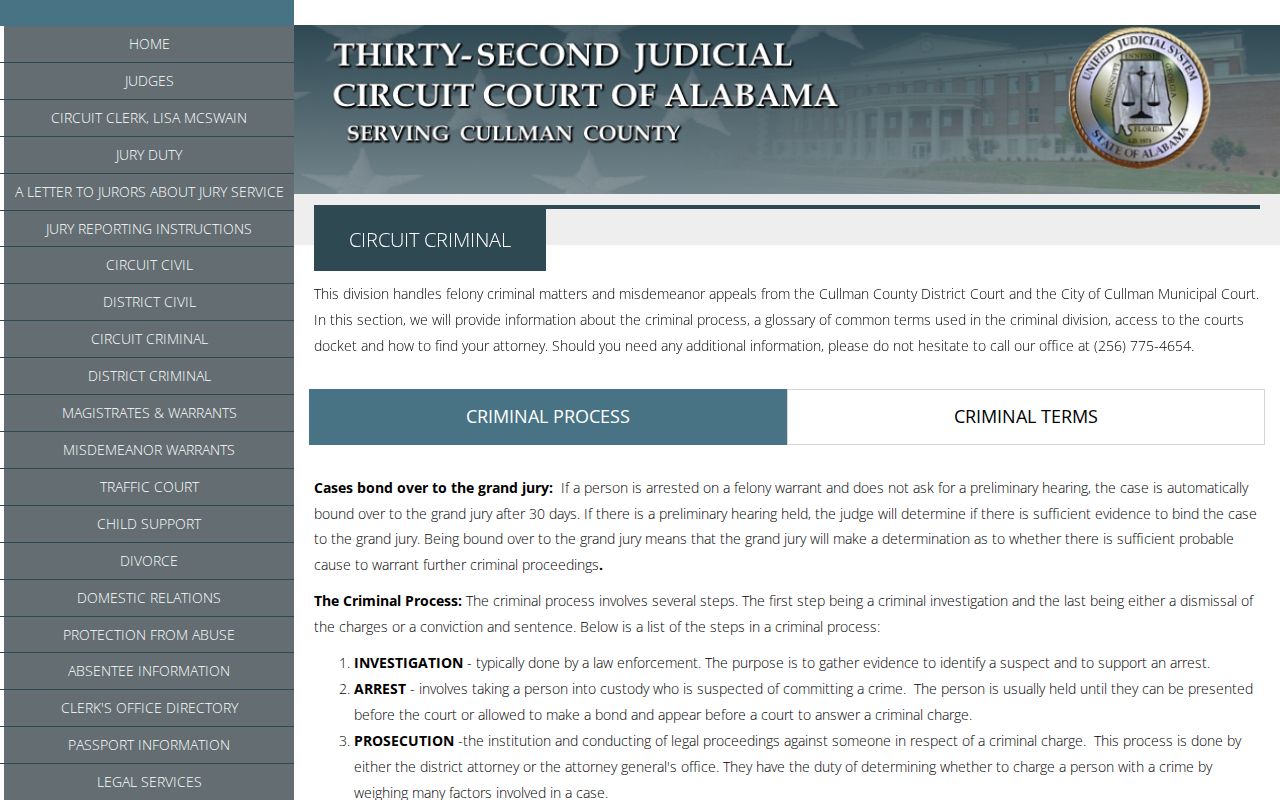
Those process points are the backbone for reading a criminal case action summary because each stage can appear as a docket event or court action.
Cullman County Criminal Record Fields
Alacourt's official case-report categories and the Cullman criminal process research provide the field inventory for criminal court records. A new case may show only a few entries. A later case can show bond, plea, trial, disposition, sentence, restitution, court costs, appeal activity, and images or attachments when public and imaged.
| Field | What It Shows |
|---|---|
| Case number | The court identifier used to search, request copies, pay costs, or contact the clerk. |
| Defendant | The person accused in the criminal case, with public party details when allowed. |
| Court | Whether the matter is Circuit criminal, District misdemeanor, District preliminary felony, traffic, or municipal. |
| Charges | The allegations filed in court, which may later be amended, dismissed, reduced, or resolved by plea or trial. |
| Bond-over or grand jury action | Felony process events after a preliminary hearing waiver, probable-cause finding, or grand jury review. |
| Plea | The defendant's formal response, usually guilty or not guilty, or later plea activity. |
| Setting dates | First appearance, arraignment, preliminary hearing, trial, sentencing, or other court dates. |
| Disposition | The outcome of a charge or case, such as guilty, dismissed, acquitted, or another final result. |
| Sentence | Jail, prison, probation, fines, costs, restitution, or other punishment ordered after conviction. |
| Case action summary | The docket-like history of filings, court actions, rulings, and updates. |
Cullman Felony and Misdemeanor Cases
Felony and misdemeanor records can pass through different stages. Circuit Court handles felony criminal matters, and the local Circuit Criminal page describes arrest on felony warrant, preliminary hearing request or waiver, bond-over to the grand jury, conviction, sentence, and appeal paths. District Court handles misdemeanor criminal offenses, preliminary felony hearings, and some felony guilty pleas not punishable by death.
Misdemeanor warrant cases have a local first appearance path. If a warrant is issued, it is sent to the Sheriff's Office for service. After arrest, the case is placed on a First Appearance Docket. The defendant appears and enters a guilty or not guilty plea. If the plea is not guilty, the case is set for trial, and the complainant receives a subpoena from the Clerk's Office. Supporting documents and restitution affidavits should be filed before the first appearance when they are needed in the case.
Cullman Charges vs Convictions
A charge in a Cullman County criminal court record is an accusation filed in court. A conviction is a final guilty finding or guilty plea accepted by the court. The difference matters because a case can show charges that were dismissed, reduced, amended, resolved by plea, or ended in acquittal. Do not treat a charge line as a sentence line.
| Charge | Conviction | |
|---|---|---|
| Meaning | An accusation or filed count in the criminal case. | A guilty result by plea, verdict, or court finding. |
| Record location | May appear early in the case action summary or charging document. | Appears in disposition, judgment, plea, or sentencing entries. |
| Can change | May be amended, reduced, dropped, dismissed, or superseded by indictment. | Can lead to sentence, costs, restitution, probation, appeal, or later expungement issues. |
| Public meaning | Does not prove guilt by itself. | Shows a court outcome, subject to appeal, sealing, expungement, or correction. |
Cullman County Prosecutor Role
The District Attorney is central to how criminal charges move through Cullman County court records. Research identifies the Cullman County District Attorney's Office as Circuit 32, led by District Attorney Champ Crocker. The Alabama District Attorneys directory lists the office at 500 2nd Avenue SW, Cullman, AL 35055, with phone 256-736-2800 and fax 256-734-6694.
The DA does not keep the public court case file, but the prosecutor's actions can shape what appears in the record. The state may present felony matters to the grand jury, negotiate pleas, take positions on restitution, proceed to trial, dismiss charges, or handle sentencing issues. For appointed counsel, the research did not locate a standalone official Cullman County public defender office page. City of Cullman Municipal Court does provide an Affidavit of Substantial Hardship path for defendants subject to jail who seek appointed counsel.
The Alabama District Attorneys directory provides the official statewide lookup for district attorney contact information.
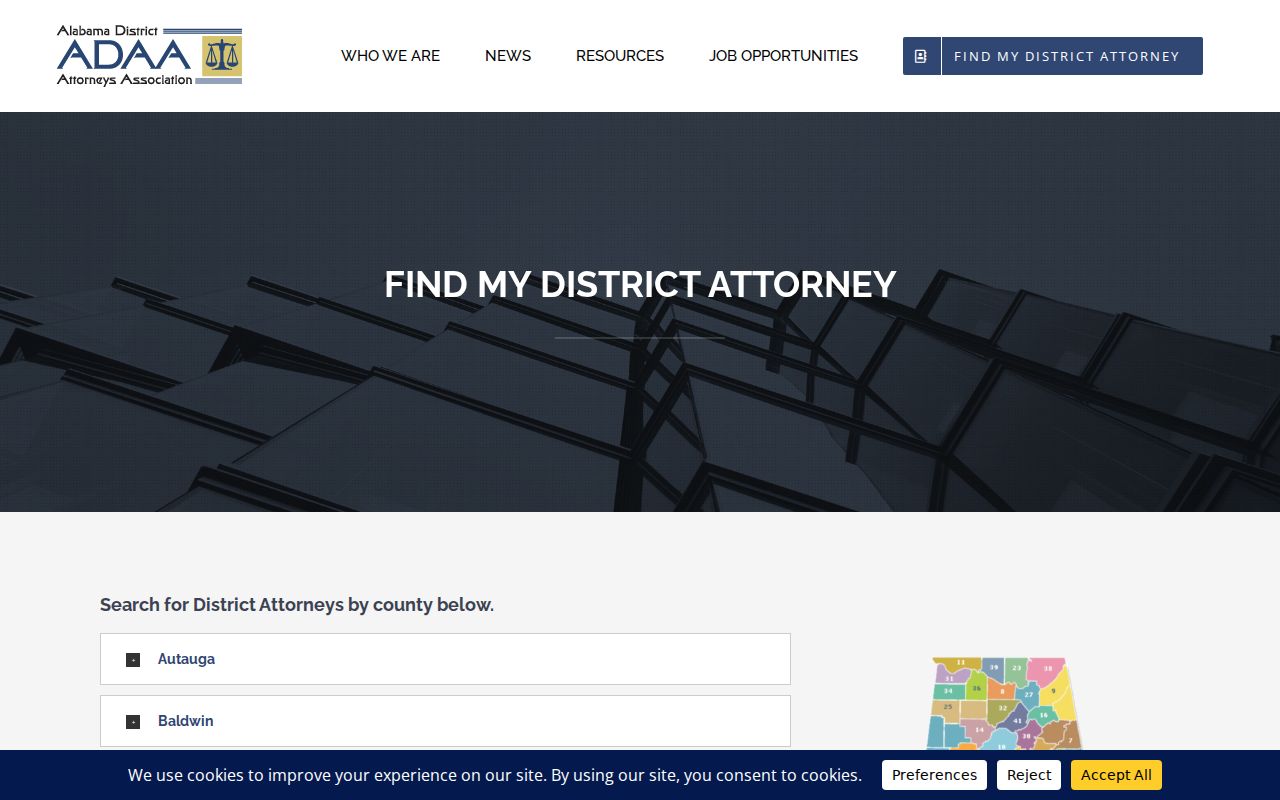
That directory supports office identification, while the Circuit Clerk remains the source for court-file copies and case record questions.
Reading Dispositions and Sentences
The disposition is the outcome of a charge or case. It may show guilty, not guilty, dismissed, acquitted, reduced, or another status. A sentence is different. Sentencing follows a conviction and may include custody, probation, fines, court costs, restitution, conditions, or other court orders. In Cullman misdemeanor warrant cases, restitution affidavits should be filed before first appearance if repayment is sought, and supporting paper documents can be scanned into the court case file.
Some evidence or support material may not appear as an online image. The misdemeanor warrant process states that the Clerk can scan supporting paper documents, but cannot scan or store photos, CDs, or audio/video tapes. That local detail matters when a case record references evidence without showing every item online. For a certified sentencing order or judgment entry, contact the Circuit Clerk criminal division rather than relying only on the public portal.
Sealed vs Expunged Criminal Records
Restricted criminal records are not the same as ordinary public case files. City of Cullman Municipal Court states that juvenile records, Youthful Offender records, and sealed records are not public. Alabama expungement is a separate court process filed in the criminal division of the circuit court where the charge was filed. For qualifying Cullman charges, that means Circuit Court and the Circuit Clerk.
| Sealed | Expunged | |
|---|---|---|
| Public visibility | Hidden from public access by court order or legal rule. | Removed from public view under the Alabama expungement process when granted. |
| How it happens | Can arise from statute, case type, or a court sealing order. | Requires a petition in the criminal division of the circuit court where the charge was filed. |
| Examples | Juvenile, Youthful Offender, sealed cases, and some sensitive information. | Qualifying misdemeanor, violation, traffic, municipal ordinance, or felony charges under Alabama expungement law. |
| Remaining access | Authorized agencies or court users may still have limited access. | Public access is restricted, but internal law-enforcement or court uses may not vanish in every context. |
Public Criminal Court Access
Alabama's public-record framework begins with Alabama Code Section 36-12-40, but criminal court records also depend on court rules, public portal limits, clerk procedures, sealed-record orders, and confidentiality statutes. Adult criminal case records are often public, yet online access, document images, certified copies, and older files may require fees or direct clerk contact.
Expungement and juvenile confidentiality are key criminal record limits. Alabama Code Section 15-27-1 addresses qualifying misdemeanor, violation, traffic, and municipal ordinance expungement. Alabama Code Section 15-27-2 addresses qualifying felony expungement. Alabama Code Section 12-15-133 makes juvenile court records and related reports confidential except for authorized access. The state code database is maintained through Alabama's legislative database.
Key access point: Public criminal court access may show the case history, but restricted records and certified copies still require the proper court channel.
Restricted Cullman Criminal Records
Juvenile records, Youthful Offender records, sealed cases, expunged matters, unserved warrants, and protected personal identifiers should not be treated as ordinary public criminal court records. The Magistrates and Warrants page says an arrest warrant is not public until served. Municipal Court says Youthful Offender and juvenile records are not public. ADOC also excludes inmates sentenced as Youthful Offenders from its public search.
Sex-offender information is governed by a different state channel. ALEA explains public dissemination limits for the sex offender registry, including categories that are not public due to juvenile, Youthful Offender, or out-of-state status. Registry information is not a substitute for the Cullman County criminal court record because it does not show every filed charge, plea, docket event, disposition, or sentence in the local case file.
The ALEA sex offender registry public-information notes describe registry access limits that can affect what the public sees.
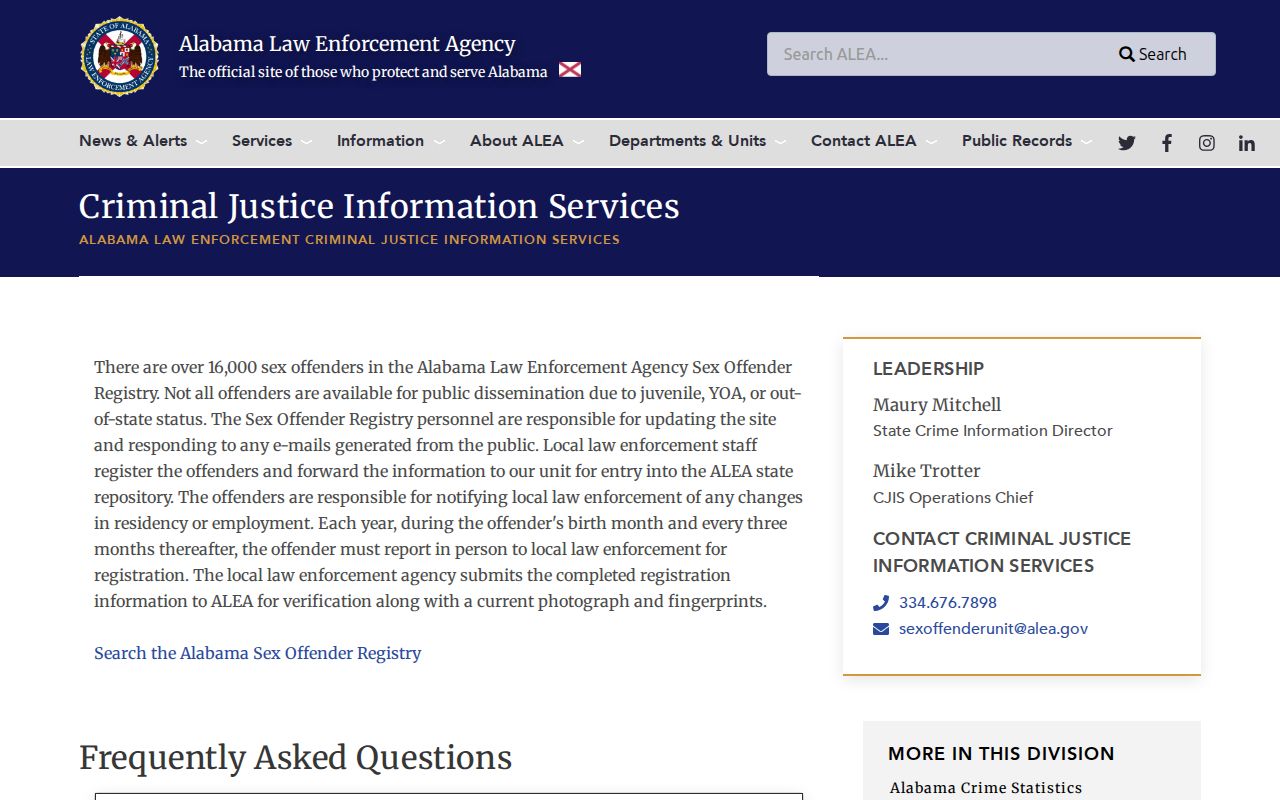
Those limits reinforce the main rule for criminal court records: use the court file for the case outcome, and use state registry tools only for the registry purpose they serve.